

1. Product Development Trends
1.1 Mechanism of Action and Product Positioning
Quinoxyfen is a quinoline fungicide developed by Dow AgroSciences (now part of Corteva). The product was first registered in Europe in 1996, approved in the US under the EPA's Reduced Risk Pesticide Program in 1999, received EU approval in 2004, and was first authorized for use in Europe in 1997. It is widely used on vegetable and fruit crops such as cherries, grapes, and lettuce.
Quinoxyfen belongs to the quinoline chemical class and is the sole quinoline fungicide member of FRAC Group 13, with a unique mechanism of action exclusive to this group. The product is a protective fungicide with systemic translocation properties, acting by inhibiting the formation of appressoria in powdery mildew fungi, thereby preventing infection. Quinoxyfen has a unique mechanism – it interferes with the pathogen's signal transduction pathway. Appressorium formation is a critical step for powdery mildew fungi to successfully invade host cells, and quinoxyfen's interference with this process makes it a key tool in powdery mildew control.
Quinoxyfen exhibits unique surface mobility: after application, it binds to the waxy layer of plant leaves and moves between leaf tissues through slow release of vapor, protecting leaf and fruit parts that were not directly sprayed, forming a continuous protective barrier. It has a duration of up to 14 days and excellent rainfastness – rainfall within one hour after application does not affect efficacy. Application intervals are 10–14 days on grapes and 7–10 days on vegetables.
Regarding target crops, quinoxyfen is primarily used to control powdery mildew on cereals (wheat, barley), grapes, cucurbits (melons, cucumbers, etc.), mangoes, tomatoes, and hops. In Italy, a 250 g/L suspension concentrate formulation has demonstrated a high level of protection and flexible application strategies under diverse environmental conditions.
1.2 Product Differentiation Advantages
The core differentiated advantages of quinoxyfen are reflected in three aspects:
First, its unique target site makes it a key option for resistance management rotation programs. Against the backdrop of increasing resistance to mainstream fungicides – with QoIs (FRAC 11) and DMIs (FRAC 3) now showing widespread resistance – quinoxyfen's unique mechanism of action underpins its irreplaceable value.
Second, its market positioning is highly focused on powdery mildew control. The product is specifically targeted against powdery mildew pathogens. Although this limits its broad-spectrum activity, it offers highly targeted advantages in areas with high powdery mildew pressure.
Third, it has low toxicity and environmental friendliness. Quinoxyfen has favorable toxicological, environmental, and ecotoxicological profiles. The US EPA listed it under the Reduced Risk Pesticide Program in 1999. It has short re-entry intervals (12 hours), a pre-harvest interval of 3 days, and low personal protective equipment requirements.
1.3 Formulation Development and Combination Strategies
Formulation structure: As of 2020 data, Suspension Concentrate (SC) and Liquid (LI) are the two dominant formulation types for quinoxyfen. In Italy, the 250 g/L SC has been shown to provide a high level of protection under variable field conditions.
Combination product development: Combining quinoxyfen with fungicides having other mechanisms of action is an important direction for product value addition. Quinoxyfen-azoxystrobin combination products have been developed globally and show higher market growth than single-active products. Additionally, quinoxyfen can be rotated with various fungicides, including mixtures or alternations with triflumizole (FRAC 3), chlorothalonil (FRAC M5), etc., to delay resistance development. In grape powdery mildew resistance monitoring, combinations of quinoxyfen with benzovindiflupyr, metrafenone, and other products provide excellent control.
1.4 Registration Landscape and Key Changes
The key registration developments for quinoxyfen represent the most critical variables in the market landscape.
EU registration status: No longer approved.
Registration status in other regions: Quinoxyfen is currently still authorized for use in many countries, including Australia, Chile, and the United States. In Canada, the Pest Management Regulatory Agency (PMRA) has nine records of applications containing quinoxyfen, with the QUINTEC FUNGICIDE product bearing registration number 29755. In the US market, Dow AgroSciences' Quintec® product remains widely used, with a re-entry interval of 12 hours, a pre-harvest interval of 3 days, and low personal protective equipment requirements.
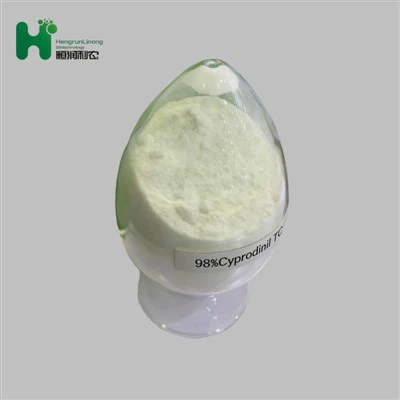
Registration landscape in China: Shaanxi Hengrun Linong Biotechnology Co., Ltd. is the sole legally registered manufacturer in China.

2. Market Development Trends
2.1 Global Market Size and Estimation Challenges
The global market size for quinoxyfen varies significantly across different statistical methodologies and assessment dimensions, due to the product's patent status evolution, changes in product line ownership, and the recent withdrawal from the EU market.
In 2019, when Nissan Chemical Corporation acquired the entire quinoxyfen product line (including brands such as Quintec® and Fortress™) from Corteva, Inc., the industry-level valuation of the product line was approximately US$280 million, with the primary market being the US powdery mildew control market. This valuation represents an authoritative industry data point for the overall commercial value of the quinoxyfen product line as reported in public sources.
2.2 Market Valuation in Industry Acquisition Event
In December 2019, Nissan Chemical announced the acquisition of the quinoxyfen product line from Corteva. The transaction covered all brands, including Quintec® and Fortress™, as well as related inventories. Quinoxyfen is a protective fungicide effective against powdery mildew in cereals, grapes, stone fruits, and vegetables such as cucurbits. It has a unique mode of action and is marketed globally primarily as the single-active product Quintec® and as the mixture product Arius™ (quinoxyfen + myclobutanil). The primary market was the United States, with a market value of approximately US$280 million. Following the acquisition, Nissan Chemical partnered with Gowan Company, headquartered in Arizona, USA, to integrate quinoxyfen into Gowan's business entities in the United States, Mexico, and Chile.
2.3 Regional Market Patterns and Key Developments
(1) Major changes in the EU market
The withdrawal of quinoxyfen from the EU market has had a profound impact on global supply-demand dynamics. The EU exit represents the largest structural change in the global quinoxyfen market.
(2) United States market – core sales region
The United States is the core sales region for quinoxyfen and was the primary market assessed during the 2019 acquisition. Quintec® is the only registered FRAC Group 13 fungicide in the US market, widely used for powdery mildew control on various crops including grapes, cucurbits, stone fruits, strawberries, and peppers. Gowan Company is now the exclusive distributor of Quintec® in the United States, Mexico, and Chile.
(3) Australia market – active growth region
Australia is currently one of the most active growth markets for quinoxyfen. During 2023–2024, the APVMA (Australian Pesticides and Veterinary Medicines Authority) issued a series of emergency use permits for wheat powdery mildew control. GRDC (Grains Research and Development Corporation)-funded research confirmed that quinoxyfen (products containing 250 g/L quinoxyfen, e.g., Legend®, permit number PER93197), together with metrafenone (Vivando®, PER93198) and proquinazid (Talendo®, PER93216), was approved for wheat powdery mildew control. This marks the first time quinoxyfen has been permitted for use in Australian wheat, following its long-standing authorization in crops such as grapes (Legend fungicide approved for grape powdery mildew control in 2002).
(4) Other markets
Quinoxyfen currently maintains registrations in several other countries, including Chile and Israel, and continues to be sold through Gowan Company's distribution channels.
2.4 Competitive Landscape
Original developer: Dow AgroSciences (later merged into Corteva Agriscience) was the original developer of quinoxyfen, holding core trade names such as Quintec® and Fortress™, as well as the combination product Arius™ (quinoxyfen + myclobutanil).
Product line transfer: In December 2019, Nissan Chemical acquired the entire quinoxyfen product line from Corteva. Subsequently, Nissan Chemical partnered with Gowan Company to integrate quinoxyfen into Gowan's business entities in the United States, Mexico, and Chile. Gowan Company is now the exclusive distributor of Quintec® in these markets.
Entry of Chinese enterprises: In 2024, quinoxyfen received its first export-only registration in China, marking the official entry of Shaanxi Hengrun Linong Biotechnology Co., Ltd. into the global quinoxyfen supply chain, primarily participating in global supply through exports of technical material and formulations.
Other participants: Other global participants include Arysta LifeScience, among others, which distribute quinoxyfen products in Europe and other regions.
2.5 Market Trend Summary
The quinoxyfen market is currently in a transitional phase:
Positive factors: The resistance management value derived from its unique mechanism of action (FRAC Group 13) is increasingly prominent in rotation programs; the essential global demand for powdery mildew control persists; demand from high-value crop segments (grapes, vegetables, fruits, etc.) remains stable; the 2019 acquisition of the product line by Nissan Chemical at an industry valuation of approximately US$280 million indicates industry recognition of its commercial value; demand for quinoxyfen is growing in emerging markets such as Australia due to resistance management needs; the entry of Chinese enterprises into the supply chain could help expand global supply.
Negative factors: The EU withdrawal is the largest negative variable, leading to significant contraction in total global market volume.
Future direction: Future market growth will rely more on regions where quinoxyfen remains available, such as North America, Australia, and Latin America. The development of combination products with fungicides having other mechanisms of action and rotational use within Integrated Pest Management (IPM) programs will be the main direction for product value addition. Following China's granting of an export-only registration, Chinese enterprises are expected to play a more important role in the global supply chain.
3. Strategic Recommendations
(1) Product strategy:
Prioritize the development of combination products of quinoxyfen with fungicides having other mechanisms of action to address resistance issues and broaden the disease control spectrum. Given that quinoxyfen specifically targets powdery mildew, combinations with DMI products (e.g., tebuconazole), QoI products (e.g., azoxystrobin), and others can provide broader-spectrum disease protection. Additionally, explore environmentally friendly formulation directions such as liquids and suspension emulsions to enhance product competitiveness.
(2) Market strategy:
Focus on the following regions and segments: First, the North American market – the US EPA listed quinoxyfen under its Reduced Risk Pesticide Program in 1999, providing a stable market foundation, and the Quintec® brand is well-established. Second, the Australian market – GRDC research and APVMA permits indicate active local demand for quinoxyfen, making it an important growth market. Third, high-value crop segments (grapes, vegetables, fruits, etc.) – where growers have strong willingness to pay and unit values are high.
(3) Supply chain strategy:
The first export-only registration for quinoxyfen in China in 2024 marks the official entry of Shaanxi Hengrun Linong Biotechnology Co., Ltd. into the global quinoxyfen supply chain. At the same time, attention should be paid to companies' brand competition and channel advantages, adopting differentiated competitive strategies.