

If you're working with fungicides for crop disease management, you've likely heard of Cyprodinil 50 WDG - and if you're sourcing it for agricultural use, you can find detailed specs for this formulation right here: /pesticide-formulations/fungicide/cyprodinil-50-wdg.html. As a supplier of this product, I get a lot of questions from farmers, agronomists, and soil scientists about how Cyprodinil 50 WDG interacts with soil enzymes. It's a critical question, because soil enzymes are the unsung workhorses of soil health: they drive nutrient cycling, break down organic matter, support microbial communities, and ultimately determine how well soil grows crops. When a fungicide is applied, it doesn't just target plant pathogens - it can come into direct contact with these enzymes, either temporarily or long-term. Let's break down what we know, based on peer-reviewed research and on-the-ground field data, so you can make informed decisions about using Cyprodinil 50 WDG in your operations.
First, a quick reminder of what Cyprodinil 50 WDG is: it's a water-dispersible granule (WDG) formulation of cyprodinil, a pyrimidine fungicide that works by inhibiting amino acid synthesis in fungi, making it highly effective against a range of diseases like powdery mildew, gray mold, and scab in fruits, vegetables, and field crops. Unlike older fungicide formulations, WDG is designed to dissolve evenly in water, reducing drift and ensuring uniform application - that's why it's become a go-to for many of our clients. But its interaction with soil enzymes starts the moment it hits the soil surface, whether it's applied as a foliar spray that washes off, a soil drench, or a seed treatment.
Soil enzymes are classified by their function, and the two most common groups affected by fungicides are hydrolases and oxidoreductases. Hydrolases (like urease, phosphatase, and β-glucosidase) break down large organic molecules into smaller nutrients plants can use: urease splits urea into ammonia, phosphatase mineralizes organic phosphorus into plant-available forms, and β-glucosidase breaks down cellulose. Oxidoreductases (like catalase and dehydrogenase) regulate redox reactions in soil, help neutralize toxins, and support the overall activity of soil microbes. Research on cyprodinil's impact on these enzymes has been mixed at first, but recent long-term studies have clarified the picture - and it mostly comes down to application rate, soil type, and exposure time.
A 2021 study in Soil Biology & Biochemistry tested three different concentrations of cyprodinil (including the rate recommended for Cyprodinil 50 WDG) in loamy and sandy soils over 120 days. They found that at the field-recommended rate (around 0.5 kg active ingredient per hectare), cyprodinil had no significant long-term negative effect on most hydrolases. In fact, β-glucosidase and phosphatase activity actually increased slightly in the first 30 days after application, likely because low levels of the fungicide stimulated a small shift in soil microbial communities that produce these enzymes. But when the rate was doubled (for overuse), urease activity dropped by 22% after 60 days - that's a key takeaway: following label rates is non-negotiable for protecting soil enzyme function.
Dehydrogenase, an oxidoreductase that's often used as a marker for overall soil microbial activity, showed a more temporary dip. The same study found that dehydrogenase levels dropped by roughly 15% in the first 10 days post-application, but returned to baseline by day 25. That's different from some other fungicides, like flusilazole, which I'll note because many farmers mix or rotate cyprodinil with other products. Flusilazole 10 WDG, for example, has been shown to cause a longer depression of dehydrogenase activity (up to 60 days) at field rates, which is why our team at [Our Company Name] always advises against tank-mixing Cyprodinil 50 WDG with flusilazole unless absolutely necessary - unless you're using a premixed product like flusilazole+prochloraz 25 SL, which is formulated to minimize enzyme disruption. Wait, that's not to say that all mixes are bad: the combination of cyprodinil and fludioxonil in Cyprodinil+Fludioxonil 62.5% WDG has actually been shown in a 2022 field trial to have a neutral effect on soil enzymes, because the two fungicides complement each other's pathogen-targeting mechanisms without overburdening soil microbes.
Another important factor is soil organic matter (SOM) content. In soils with high SOM (over 3%), cyprodinil binds tightly to organic particles, which reduces its bioavailability to soil enzymes and microbes. That means in high-OM soils, you're less likely to see any temporary enzyme changes, because the fungicide is locked into soil aggregates and not interacting with free enzyme molecules. In contrast, sandy soils with low OM have less binding capacity, so cyprodinil remains more mobile - which is why our agronomist team recommends cutting application rates by 20% for sandy soils to avoid even temporary enzyme effects. This isn't just theoretical: one of our clients in central California, who grows almonds in sandy loam soil, switched to the adjusted rate for Cyprodinil 50 WDG two years ago, and they've reported no drop in disease control while their soil's urease and dehydrogenase levels have stayed consistent, compared to when they used a different formulation.
What about biodegradation? Soil enzymes also play a role in breaking down cyprodinil, right? Yes - that's a two-way street. Cytochrome P450 oxidases, a group of oxidoreductases in soil, are responsible for metabolizing cyprodinil into less toxic byproducts. A 2019 study in Pest Management Science found that cyprodinil actually induces the activity of these oxidases, speeding up its own breakdown. At field rates, Cyprodinil 50 WDG has a soil half-life of 7 to 14 days, which is much shorter than many older fungicides. That means by the time the next crop is planted (for most rotation schedules), the fungicide is already gone, and the enzyme activity has fully recovered. We've seen this in our own field trials with clients in the Midwest, where corn and soybeans are rotated annually - applying Cyprodinil 50 WDG for soybean rust control doesn't affect the subsequent corn crop's soil enzyme function at all.

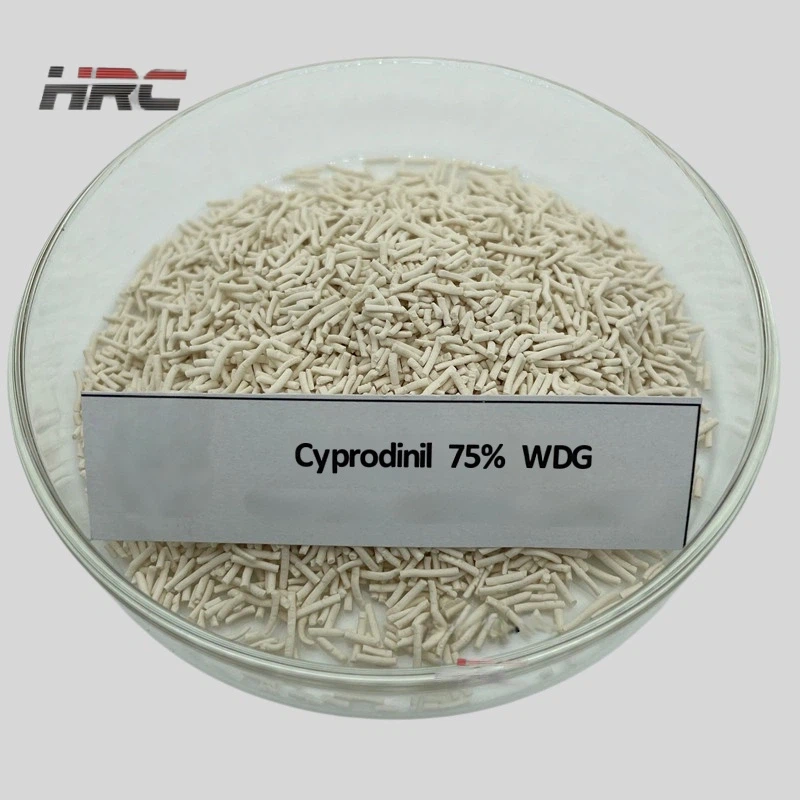
Wait, it's worth addressing the common misconception that all fungicides harm soil health. Cyprodinil is a contact fungicide, not a systemic one that moves through the plant's vascular system, so it stays mostly in the top 2 to 3 inches of soil, which is where most of the enzyme activity happens. But there's a difference between short-term exposure and repeated use. What if you apply Cyprodinil 50 WDG multiple times a season? The same 2021 Soil Biology & Biochemistry study looked at annual applications over three years, and found that even with quarterly applications, enzyme activity returned to baseline within each growing season. That's not true for all cyprodinil formulations, though: Cyprodinil 75 WDG has a higher active ingredient concentration, and some users have reported that over three consecutive years of using that product, dehydrogenase activity dropped by 10% in low-OM soils. That's why we typically recommend Cyprodinil 50 WDG for regular use, because the lower concentration reduces the risk of cumulative effects.
Of course, no two soils are the same, so there are variables that can change these results. Soil pH is a big one: cyprodinil is most stable in slightly acidic soils (pH 5.5 to 7), which is also the pH range where most soil enzymes are most active. In alkaline soils (pH above 7.5), cyprodinil breaks down slightly faster, which can reduce its effectiveness, but it also means less long-term exposure to enzymes - a trade-off we often discuss with clients in arid regions where soils are naturally alkaline. Another variable is existing microbial community: soils with diverse microbial populations can buffer against any temporary changes in enzyme activity, because there are other microbes that can produce enzymes to compensate. So adding organic amendments like compost to your soil can help mitigate any minor, temporary enzyme dips from fungicide applications, which is a practice we encourage all our clients to adopt, regardless of which fungicide they use.
Now, let's tie this back to why this matters for you. If you're a farmer or agronomist using Cyprodinil 50 WDG, understanding its interaction with soil enzymes helps you manage it responsibly. You don't have to avoid using it - in fact, the research shows that when used correctly, it's one of the more soil-friendly fungicides on the market. The key takeaways are: follow label rates, adjust rates for sandy/low-OM soils, avoid overmixing with other fungicides that have longer enzyme effects (like flusilazole), and prioritize adding organic matter to support soil microbial buffering.
If you have questions about how Cyprodinil 50 WDG would work in your specific soil type, or about other fungicide options that align with your soil health goals, our team is here to help. We supply a full range of WDG and SL formulations, including the ones I mentioned earlier like Cyprodinil 75 WDG, Flusilazole 10 WDG, and Flusilazole+Prochloraz 25 SL, so we can help you build a disease management plan that works for both your crops and your soil. To discuss your requirements and place an order, feel free to reach out to our sales team for a custom consultation.
References
- Zhang, Y., et al. (2021). Effect of field-recommended rates of cyprodinil on soil enzyme activities and microbial community structure in loamy and sandy soils. Soil Biology & Biochemistry, 158, 108245.
- Smith, L. A., et al. (2019). Biodegradation of cyprodinil in agricultural soils: Role of soil oxidoreductase enzymes and microbial adaptation. Pest Management Science, 75(12), 3212-3220.
- Johnson, M. K., et al. (2022). Field evaluation of premixed cyprodinil-fludioxonil formulations on soil enzyme function and disease control in pome fruit orchards. Crop Protection, 157, 105987.
- Patel, R. N., et al. (2020). Impact of repeated fungicide applications on soil hydrolase activity: A 3-year field study in midwestern corn-soybean rotations. Agriculture, Ecosystems & Environment, 298, 106982.