
I.General Overview
Powdery mildew is one of the most widespread and damaging fungal diseases of plants in the world, caused by various obligate parasitic fungi of the family Erysiphaceae. The pathogen can infect tens of thousands of plant species, including cereals, fruit trees, vegetables, and ornamentals, and occurs in all major agricultural regions globally. Its typical symptom is the appearance of a white powdery mildew layer on the leaf surface, young stems, flowers, and fruits; in severe cases, the mildew layer covers the entire organ, leading to leaf yellowing, impaired photosynthesis, premature plant senescence, and ultimately a significant reduction in yield and quality.
The powdery mildew pathogen is mainly transmitted by air currents; conidia are dispersed over long distances by wind and then germinate on the host surface, penetrating epidermal cells through appressoria and haustoria to obtain nutrients. The occurrence and prevalence of powdery mildew are closely related to climatic conditions, cultivation management, and varietal resistance. For its control, a strategy of "prevention first, integrated management" should be adopted; in chemical control, the rational selection of fungicides and scientific rotation of products are key measures to control powdery mildew and delay the development of fungicide resistance.
II. Climatic Conditions Favorable for Disease Development on Major Crops
(1) Wheat Powdery Mildew
Wheat powdery mildew (caused by Blumeria graminis f. sp. tritici) is one of the main diseases in the middle and late growth stages of wheat, primarily damaging leaves, leaf sheaths, stems, and ears. In the early stage, white mildew spots appear on the leaves, gradually expanding into nearly circular or long-elliptical white powdery mildew layers; in severe cases, the mildew layer covers the entire leaf, the leaves turn yellow and die, and grain filling is affected, resulting in a decrease in thousand-grain weight.
Wheat powdery mildew is relatively sensitive to temperature and humidity.
Conidia can germinate over a relative humidity range of 0–100%, but the germination rate increases with higher humidity; however, germination decreases in water droplets. From the booting stage to the heading stage of wheat, conidia can germinate when the temperature is not higher than 25°C, with the optimum temperature being 10–18°C. At around 18°C and relative humidity of 80%–97%, the disease is prone to occur and spread; the higher the relative humidity, the higher the conidial germination rate, and the more severe the disease becomes. The optimum temperature for disease development is 15–20°C, and relative humidity above 70% can already cause an epidemic. Direct sunlight inhibits conidial germination; therefore, dense plant canopies, poor ventilation and light penetration, or cloudy weather favor more severe disease.
Key environmental triggers: rainy weather after temperatures rise in spring, high field humidity caused by frequent irrigation, warm winter climates that favor overwintering and reproduction of the pathogen, and excessive nitrogen fertilization leading to canopy closure and vigorous vegetative growth, all of which significantly increase disease incidence.
(2) Grape Powdery Mildew
Grape powdery mildew (caused by Erysiphe necator, synonym Uncinula necator) can infect all green tissues of the grapevine, including leaves, shoots, flower clusters, and fruit. When fruit is affected, a grayish-white powdery lesion forms on the berry surface; infection at the young fruit stage can cause berries to wilt and drop, while at maturity it leads to cracking and rotting.
The pathogen's adaptation to temperature and humidity differs markedly from that of other crop powdery mildews. Conidia can germinate at temperatures as low as 4–7°C, with a maximum of 35°C, and the optimum germination temperature is 25–28°C. Spores can germinate under relatively low atmospheric humidity; at 25% relative humidity, the germination rate can still reach 15%. The disease develops most rapidly at temperatures of 29–35°C. Dry summers and hot, cloudy, and sultry weather conditions are most favorable for the disease; therefore, alternating periods of high temperature and drought with warm, humid, and sultry weather are especially conducive to outbreaks.
Key environmental triggers: light rain after a drought accelerates conidial release and germination; dense planting, poor ventilation and light, and excessive nitrogen fertilizer causing excessive vine growth all promote disease development; orchard canopy closure and poor air circulation are important factors that aggravate the disease.
III. Global Agrochemical Analysis for Powdery Mildew Control
Chemical control of powdery mildew relies mainly on fungicides. The commonly used active ingredients worldwide can be classified into several categories according to their modes of action.
Spiroxamine
1. Basic Properties and Mode of Action
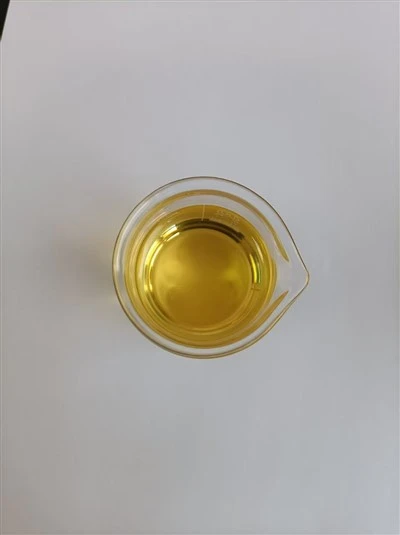
Spiroxamine is a spiroketalamine fungicide developed by Bayer, first launched in 1977. Its chemical name is 8‑tert‑butyl‑N‑ethyl‑N‑propyl‑1,4‑dioxaspiro[4.5]decane‑2‑methanamine, with molecular formula C₁₈H₃₅NO₂ and CAS number 118134‑30‑8. The technical material is a brown liquid; the pure product is a pale yellow liquid with a relative density of 0.930 (20°C).
Spiroxamine belongs to the sterol biosynthesis inhibitors (SBI), acting primarily by inhibiting the Δ⁸→Δ⁷ isomerase and Δ¹⁴‑reductase in the ergosterol biosynthesis pathway of fungi, thereby disrupting the structural integrity of the fungal cell membrane.
The compound inhibits the synthesis of C‑14 demethylase, preventing fungal cell membrane formation, which results in inhibition of spore germination and arrest of mycelial growth. Unlike other SBI fungicides (such as triazoles), spiroxamine acts at multiple sites (four different enzymes) in the ergosterol synthesis pathway, thus offering a unique resistance‑management advantage.
Spiroxamine is a systemic foliar fungicide with protective, curative, and eradicant activity. After application, it is rapidly absorbed by plant leaves and translocated within the plant; within 6 hours after application, collapse and degeneration of mycelia and spore chains can be observed. It also has good rainfastness; once the spray deposit has dried, it can withstand rain wash‑off.
2. Main Single‑Active Products and Related Information
The main single‑active formulation of spiroxamine worldwide is emulsifiable concentrate (EC), with common concentrations of 500 g/L EC, 300g/L CS, and 800 g/L EC. Among them, 500 g/L EC is the most common commercial specification.
Registered single‑active brands include the following:
- Prosper® 500 EC (Bayer CropScience) Spiroxamine 500 g/L
- Prosper TEC (Bayer CropScience) Spiroxamine 300 g/L
- SPIROX (registered in various EU countries) Spiroxamine 500 g/L
3. Main Combination Products and Related Information
Spiroxamine can be combined with various triazoles and fungicides with other modes of action to broaden the spectrum of activity, improve efficacy, and delay resistance development. Spiroxamine has been registered in many countries, including the United Kingdom, South Africa, Canada, Australia, Israel, Russia, and Colombia. The main combination products worldwide are as follows:
- FALCON 460 EC spiroxamine + tebuconazole + triadimenol.
- CAYUNIS spiroxamine + bixafen + trifloxystrobin.
- Input prothioconazole + spiroxamine.
- Luna Max fluopyram + spiroxamine.
- Cello prothioconazole + spiroxamine + tebuconazole.
Triazoles (DMI, FRAC Group 3)
Representatives:
- Tebuconazole
- Difenoconazole
- Propiconazole
- Epoxiconazole
Characteristics:
- Strong systemic and curative activity
- Widely used against wheat powdery mildew, grape powdery mildew, and cucurbit powdery mildew
- Low cost; the mainstay fungicides in the global cereal market
QoI Fungicides (FRAC Group 11)
Representatives:
- Azoxystrobin
- Pyraclostrobin
- Trifloxystrobin
Characteristics:
- Protective and curative activity
- Good crop safety
- Often formulated in combination with triazoles
SDHI Fungicides (FRAC Group 7)
Representatives:
- Fluxapyroxad
- Boscalid
- Fluopyram
- Isopyrazam
- Penflufen
Characteristics:
- Fastest‑growing segment in the high‑end market, mainly used on grapes, tomatoes, strawberries, and high‑value vegetables
IV. Identification of Powdery Mildew Symptoms
Powdery mildew mainly damages young and tender parts, including leaves, petioles, young stems, buds, flower stalks, flower buds, and petals.
Typical Symptom Characteristics
1. Appearance of White Powdery Mildew Layer (Most Typical Feature)
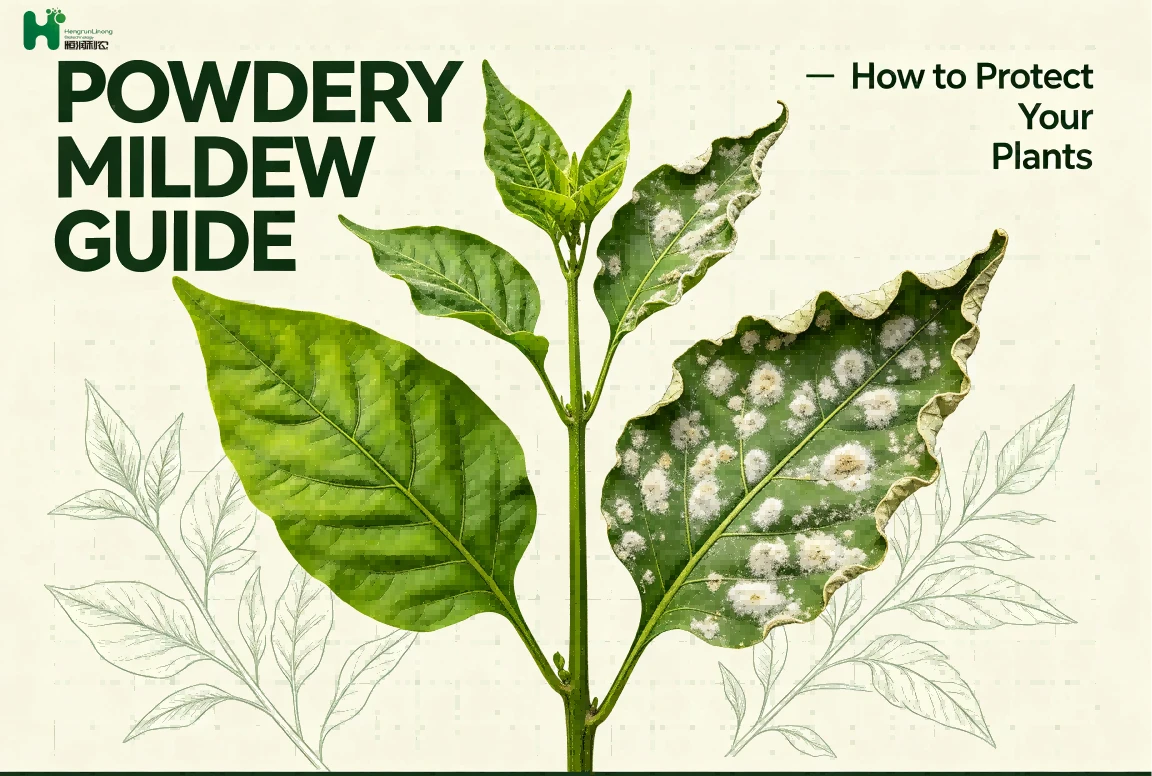
The most obvious symptom of powdery mildew is the formation of white to grayish‑white powdery material on the plant surface, mainly distributed on the upper or lower leaf surfaces, stems, petioles, inflorescences, fruit surfaces, young tissues, and newly emerged leaves.
In the early stage, lesions usually appear as isolated small white powdery spots, resembling flour adhering to the leaf surface. As the disease progresses, mycelia and conidia multiply profusely, and the white mildew layer gradually expands and coalesces, covering the entire leaf surface.
At this point, the powdery layer can be gently rubbed off with a finger, which can be used to distinguish it from internal tissue diseases such as downy mildew; at the same time, the lesion margins are irregular and diffuse, and the powdery layer becomes more pronounced under high humidity.
2. Leaf Chlorosis and Yellowing
After infecting leaves, the powdery mildew pathogen absorbs nutrients from plant cells through haustoria, leading to a reduction in chlorophyll and impaired photosynthesis.
In crops such as wheat, cucumber, and grape, the main manifestations are light green or yellow areas surrounding the white lesions, gradual leaf chlorosis, and, in severe cases, the entire leaf turning yellow.
3. Leaf Curling, Crinkling, and Premature Senescence
As the disease intensifies, affected leaves often show upward curling of leaf margins, crinkling, and deformation, accompanied by reduced growth rate or premature shedding of older leaves.
In protected vegetables such as cucumber and tomato, severe infection reduces the area of functional leaves, thereby lowering photosynthetic capacity and hindering fruit enlargement, ultimately leading to reduced yield and quality.
4. Symptoms on Stems, Young Shoots, and Fruits
In some crops, powdery mildew not only infects leaves but can also attack other green tissues.
For example, in grape powdery mildew, grayish‑white powdery layers appear on young leaves, or white powdery coverage forms on berry surfaces, and the berry skin tissue is damaged, resulting in net‑like cracks. In severe cases, berries crack and become susceptible to other rotting diseases.
In tomato powdery mildew, white circular spots form on leaves, later causing leaf yellowing and desiccation. Although tomato powdery mildew shows few direct symptoms on fruit, yield is reduced due to loss of leaf function. In cucumber powdery mildew, typical symptoms include numerous white powdery spots on the upper leaf surface, eventually covering the entire leaf with white powder, leading to premature death of older leaves.
V. Identification of Powdery Mildew Symptoms on Major Crops
Wheat Powdery Mildew
Wheat powdery mildew mainly occurs on leaves, leaf sheaths, stems, and ears of wheat.
In the early stage, small white mildew spots appear on leaves; in the middle stage, the white powdery layer expands to cover the leaf surface; in the late stage, the powdery layer turns grayish‑white, and the lower leaves may die off severely.

Grape Powdery Mildew

Grape powdery mildew is one of the most important diseases in grape production worldwide.
On leaves, symptoms appear as grayish‑white powdery spots, leaf crinkling, and marginal curling; in severe cases, leaves dry up.On fruit, the berry surface is covered with white powder, the skin stops growing, and berries crack. Infection at the young fruit stage is the most dangerous.
Cucumber Powdery Mildew
Cucumber powdery mildew mainly shows small white spots on the upper leaf surface, which rapidly enlarge over time to form large patches of white powder; in the later stage, leaves turn yellow and dry up.

VI. How To Cooperate With Us?
In China, our company has over 20 years of extensive experience in powdery mildew control, covering crops such as wheat, barley, oats, rye, grape, tomato, cucumber, rose, and others. Our company can provide recommendations according to different international markets and customize various types of formulations to meet customer needs.
Our address
South of Haotong Road, Qingshui Industrial Park, Yushen Industrial Zone, Yulin City, Shaanxi Province, P.R.China
+8618149392822
sales@hengrunagro.com